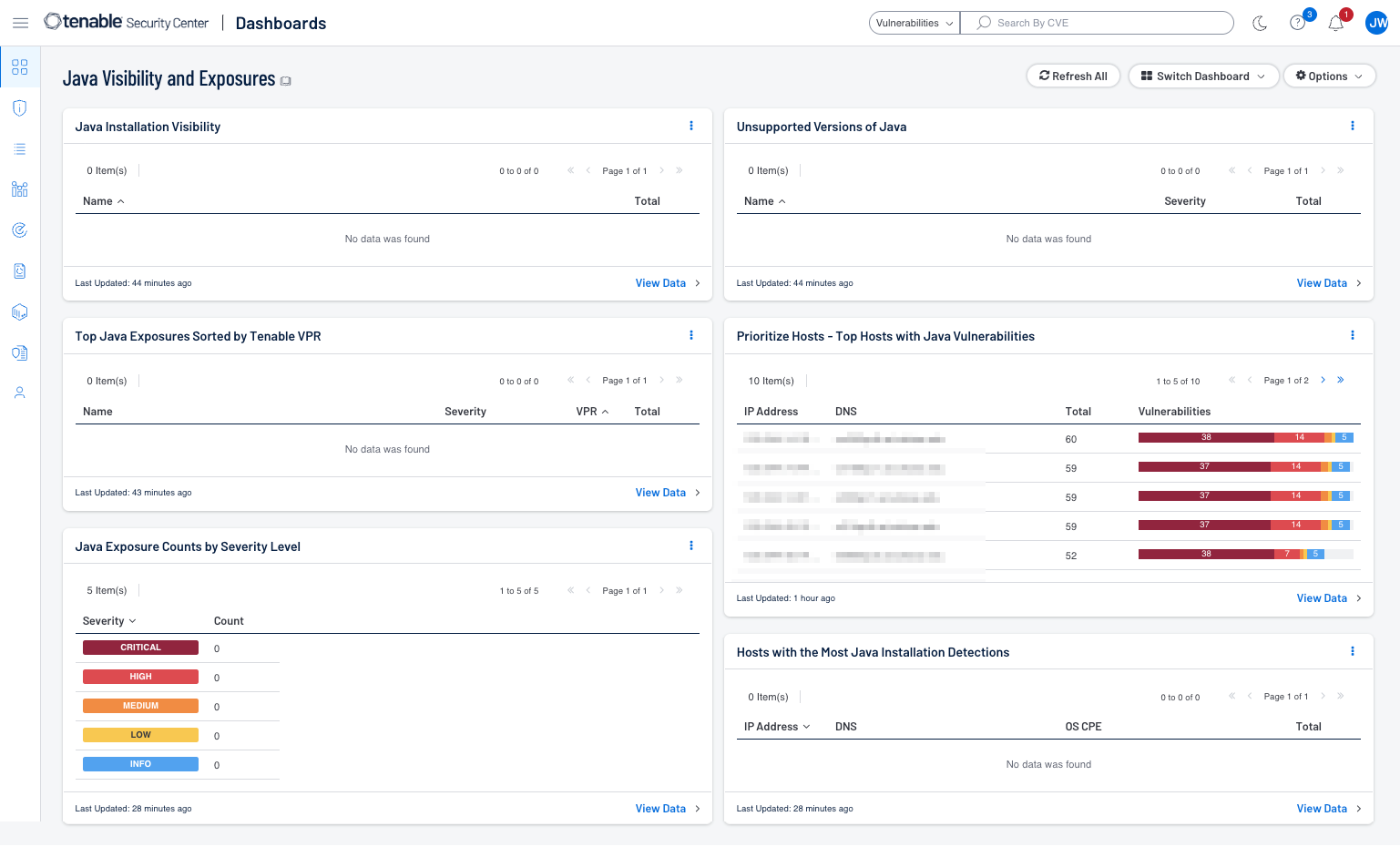
Hidden weaknesses in unpatched Java installations expand the organizational attack surface and expose the environment to severe operational disruptions. Visualizing impacted assets allows the organization to grasp how unmanaged applications increase overall risk exposure. A resilient defense posture requires continuous awareness of deployed infrastructure to prevent adversaries from exploiting network vulnerabilities. The Java Visibility and Exposures dashboard resolves these challenges by transforming complex scanning data into accessible visual formats, guiding the risk manager to proactively identify hidden flaws and secure vulnerable assets.
A strong software asset management program serves as the foundation for identifying unauthorized or end-of-life applications across the network. Without a robust software asset inventory, the security operations team cannot properly evaluate network health. The dashboard enables the risk manager to map out deployed applications, revealing potential blind spots within the infrastructure. Mapping such installations ensures the organization proactively identifies unsupported environments where vendors no longer supply security patches. Modern adversaries frequently leverage artificial intelligence to exploit unmanaged cyber risks, meaning accurate visibility into the asset landscape remains paramount for preventing unauthorized access.
Once assets are identified, prioritizing risk effectively ensures the security operations team addresses the most critical Java vulnerabilities first. Relying solely on traditional static scoring often creates overwhelming workloads. Conversely, utilizing dynamic Vulnerability Priority Ratings (VPR) focuses organizational resources on exposures associated with active threat intelligence and the highest likelihood of exploitation. Addressing high-risk exposures proactively prevents attackers from launching successful campaigns against vulnerable infrastructure. Implementing a robust vulnerability management strategy guided by threat intelligence ensures maximum risk reduction and creates a strengthened security posture.
Identifying and mapping network exposures empowers the risk manager to direct remediation efforts across affected subnets and individual host environments. Cybersecurity has evolved into a global security imperative, requiring a strategic shift toward risk-based, outcome-focused governance that elevates cyber risk discussions to the boardroom. By targeting the highest-priority threats, the organization can neutralize Server-Side Request Forgeries (SSRF) in the Java transport layer handshakes, before they can be exploited to disrupt operations. Resolving highly targeted vulnerabilities efficiently builds collective defense capabilities. Mastering detailed network visibility ultimately strengthens organizational security maturity and reduces overall cyber exposure.
Components
- Java Installation Visibility - This table provides visibility into where Java applications are installed across your environment that you have scanned with Tenable.
- Top Java Exposures Sorted by Tenable VPR - This table reports on all Java vulnerabilities uncovered across the environment.
- Java Exposure Counts per Severity Level - Java Exposure Counts per CVSS Severity Level table displays a severity breakdown of the detected Java plugins across the scanned environment.
- Unsupported Versions of Java - This table provides visibility into the unsupported versions of Java across your environment.
- Prioritize Hosts - Top Hosts with Java Vulnerabilities - This table displays the top hosts on the network that have actively or passively detected Java vulnerabilities.
- Hosts with the Most Java Installation Detections - This table displays the hosts with the most java installation detections across the scanned environment.
Tenable One
Request a demo
The world’s leading AI-powered exposure management platform.
Thank You
Thank you for your interest in Tenable One.
A representative will be in touch soon.
Form ID: 7469
Form Name: one-eval
Form Class: c-form form-panel__global-form c-form--mkto js-mkto-no-css js-form-hanging-label c-form--hide-comments
Form Wrapper ID: one-eval-form-wrapper
Confirmation Class: one-eval-confirmform-modal
Simulate Success